
How Global Conflicts Are Affecting Food Supply and Essential Commodities
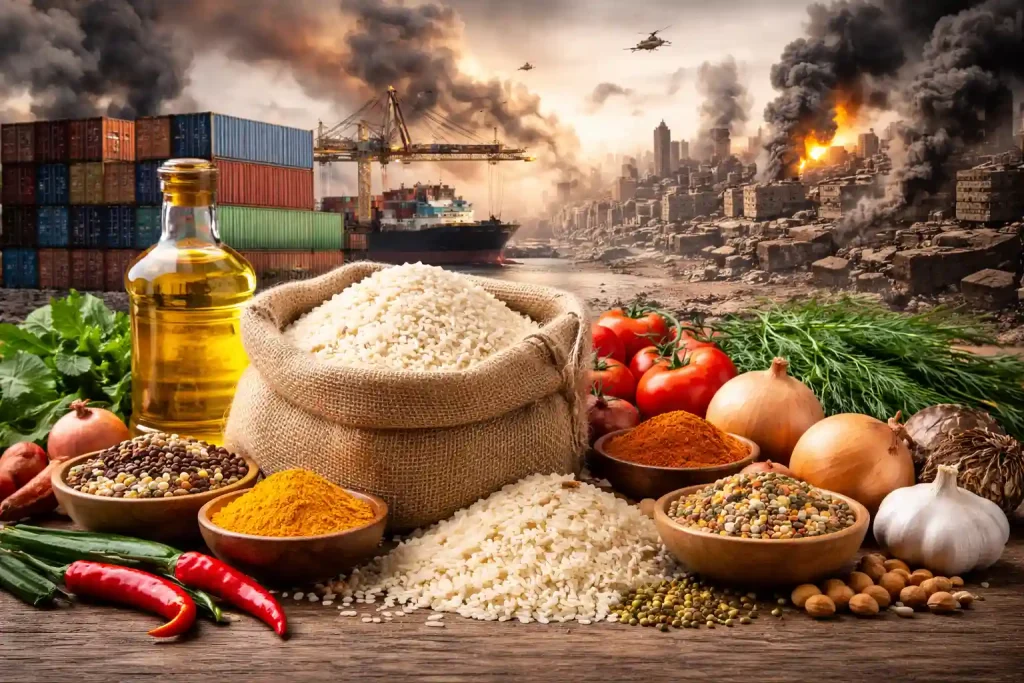
Global conflicts and geopolitical tensions can have a significant impact on international trade and the supply of essential commodities. In recent years, ongoing conflicts in various regions have disrupted global supply chains, affected transportation routes, and influenced the prices of food products, grains, edible oils, and spices.
For countries that rely heavily on imports, such disruptions highlight the importance of maintaining stable supply chains and sourcing essential commodities from reliable producers.
Impact of Conflicts on Global Food Supply
Wars and geopolitical tensions often affect agricultural production, logistics, and international trade. Some of the key impacts include:
1. Disruption of Supply Chains
Conflict zones often face disruptions in farming, storage, and transportation systems. Ports and trade routes may become restricted or unsafe, causing delays in global shipments.
2. Rising Food Prices
When production or transportation is affected, global prices of food commodities such as grains, vegetable oils, and spices can increase due to reduced supply.
3. Transportation and Logistics Challenges
Shipping routes may change due to security risks in certain regions. This can increase transportation costs and delivery times for international shipments.
4. Increased Demand for Alternative Suppliers
Countries and food manufacturers begin searching for alternative suppliers in stable regions to ensure uninterrupted supply of essential commodities.
Growing Importance of Reliable Export Partners
In times of global uncertainty, buyers look for suppliers who can provide consistent quality and stable supply. Countries with strong agricultural sectors and reliable export infrastructure become increasingly important in maintaining global food availability.
India plays a crucial role in this area by exporting a wide range of essential food products, including:
- Rice and grains
- Spices and herbs
- Pulses and lentils
- Edible oils
- Fresh fruits and vegetables
These products help support food security in many countries across the Middle East, Asia, Africa, and Europe.
India’s Role in Stabilizing Global Food Supply
India is one of the largest producers and exporters of agricultural commodities. The country has a diverse agricultural base and favorable climatic conditions that allow the cultivation of many food products throughout the year.
During periods of global uncertainty, Indian exporters contribute to stabilizing supply chains by providing:
- Consistent production of essential food commodities
- Reliable export infrastructure
- Competitive pricing and quality standards
- Strong trade relationships with international markets
Importance of Sustainable and Secure Food Trade
The recent global challenges have highlighted the need for stronger and more resilient food supply systems. Governments, businesses, and international organizations are working together to improve food security through diversified sourcing and improved trade cooperation.
Ensuring the smooth flow of agricultural products across borders helps maintain food availability and supports millions of farmers and businesses worldwide.
Nayudu General Trading – Supporting Global Supply Chains
At Nayudu General Trading, we focus on supplying high-quality agricultural products and essential food commodities sourced from trusted farms. Our goal is to maintain consistent quality, reliable packaging, and dependable supply for our international customers.
By supporting stable trade partnerships and maintaining export-quality standards, we aim to contribute to the global supply of essential food products.
Conclusion
Global conflicts and geopolitical tensions can disrupt supply chains and affect food availability worldwide. However, reliable agricultural producers and exporters play a vital role in maintaining stability in the global food market.
By strengthening international trade partnerships and ensuring quality production, companies like Nayudu General Trading help support food security and sustainable supply chains across the world.